1. Analyze Part Geometry and Complexity
The shape of your design is often the primary decider.
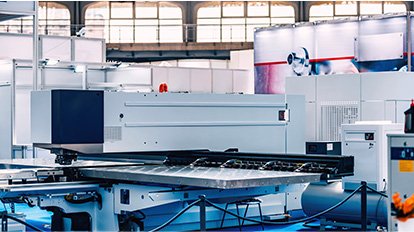
Simple Flat Parts: If you need 2D shapes, brackets, or panels, Fiber Laser Cutting is the most cost-effective and fastest method.
Complex 3D Geometries: For parts with internal cavities, deep holes, or intricate curves, 5-Axis CNC Machining is the gold standard for precision.
Ultra-Complex/Organic Shapes: If the design is impossible to machine (e.g., lattice structures), Metal 3D Printing (SLM/DMLS) offers design freedom that traditional subtractive methods cannot match.
2. Consider Material Properties
Not all metals behave the same way under different processes.
Hardness:Hardened steels or titanium may wear down CNC tools quickly, making Electrical Discharge Machining (EDM) or high-powered laser cutting better alternatives for specific shapes.
Heat Sensitivity: If your material’s properties change with heat (like certain aluminum alloys), CNC machining is often preferred over laser cutting to avoid a Heat Affected Zone (HAZ).
| Process | Materials | Precision |
| CNC Machining | Aluminum, Steel, Brass, Titanium | Extremely High (0.005-0.01 mm) |
| Laser Cutting | Carbon Steel, Stainless Steel | High (0.1 mm) |
| Sheet Metal Bending | Ductile metals (Aluminum, CRS) | Moderate |
3. Evaluate Production Volume
Your “per-part cost” fluctuates wildly based on the quantity.
Prototyping (1-10 units): CNC machining and 3D printing are ideal because they require no expensive molds or dies.
Mid-Volume (100-1,000 units): Laser cutting combined with CNC bending offers a great balance of speed and cost.
High-Volume (10,000+ units): At this stage, Metal Stamping or Die Casting becomes the most economical choice despite the high initial tooling costs.
4. Surface Finish and Tolerance Requirements
Does your part need to be airtight? Does it need to look “mirror-smooth”?
High Precision: If you require tight tolerances (e.g., for aerospace or medical devices), CNC Grinding or Milling is necessary.
Aesthetic Finish: If the part is a visible housing, you might combine a fabrication process with secondary treatments like Anodizing, Powder Coating, or Sandblasting.
5. Lead Time and Budget
Fastest Turnaround: Laser cutting typically has the shortest lead time since it requires minimal setup.
Budget-Friendly: Sheet metal fabrication is generally more affordable than CNC machining for large-scale enclosures or frames.
Conclusion: Which should you choose?
Choosing the right process is a trade-off. For precision and strength, choose CNC. For speed and flat profiles, choose Laser Cutting. For innovation and complexity, look into 3D printing.
Still unsure which process fits your blueprint?
Our engineering team specializes in optimizing designs for manufacturability (DFM). Contact us today for a technical review of your project!